Skip to content
PICTURE Art Foundation

THE ARTIST · 1908–1993

Nguyễn Gia Trí

He took a decorative craft and made a language of it. Over six decades Nguyễn Gia Trí built pictorial space out of lacquer, gold, silver, eggshell and vermilion — and changed what Vietnamese painting could be.

A life that turned a craft into a language

  1. 1908

    The making of a legend

    Born in Chương Mỹ, Hà Đông Province, now part of Hanoi.

  2. 1932–1936

    The formative years

    École des Beaux-Arts de l’Indochine, Hanoi.

  3. 1937–1941

    The first steps

    Roaming from Hanoi through the northern midlands, he observed, sketched and experimented, deepening his engagement with landscape and everyday life.

  4. 1941–1953

    Years of turbulence

    From Vụ Bản and Châu Lạc Sơn in Hòa Bình to Sơn La Prison; from Hanoi to Shanghai and Hong Kong; then back to Hanoi and onward to Thủ Dầu Một, Bình Dương.

  5. 1953–1975

    Establishing his artistic legacy

    In Saigon he devoted himself increasingly to lacquer, developing a distinctive voice and deepening his mastery of the medium.

  6. 1975–1993

    The culmination of a lifetime

    He continued to work quietly in Ho Chi Minh City, bringing a lifetime of creation to a close and leaving a profound legacy in Vietnamese art.

“The secret of art is to intend nothing at all. Let the indistinct remain, preserve the shadow. Oil painting differs from lacquer in that it has no shadow.”
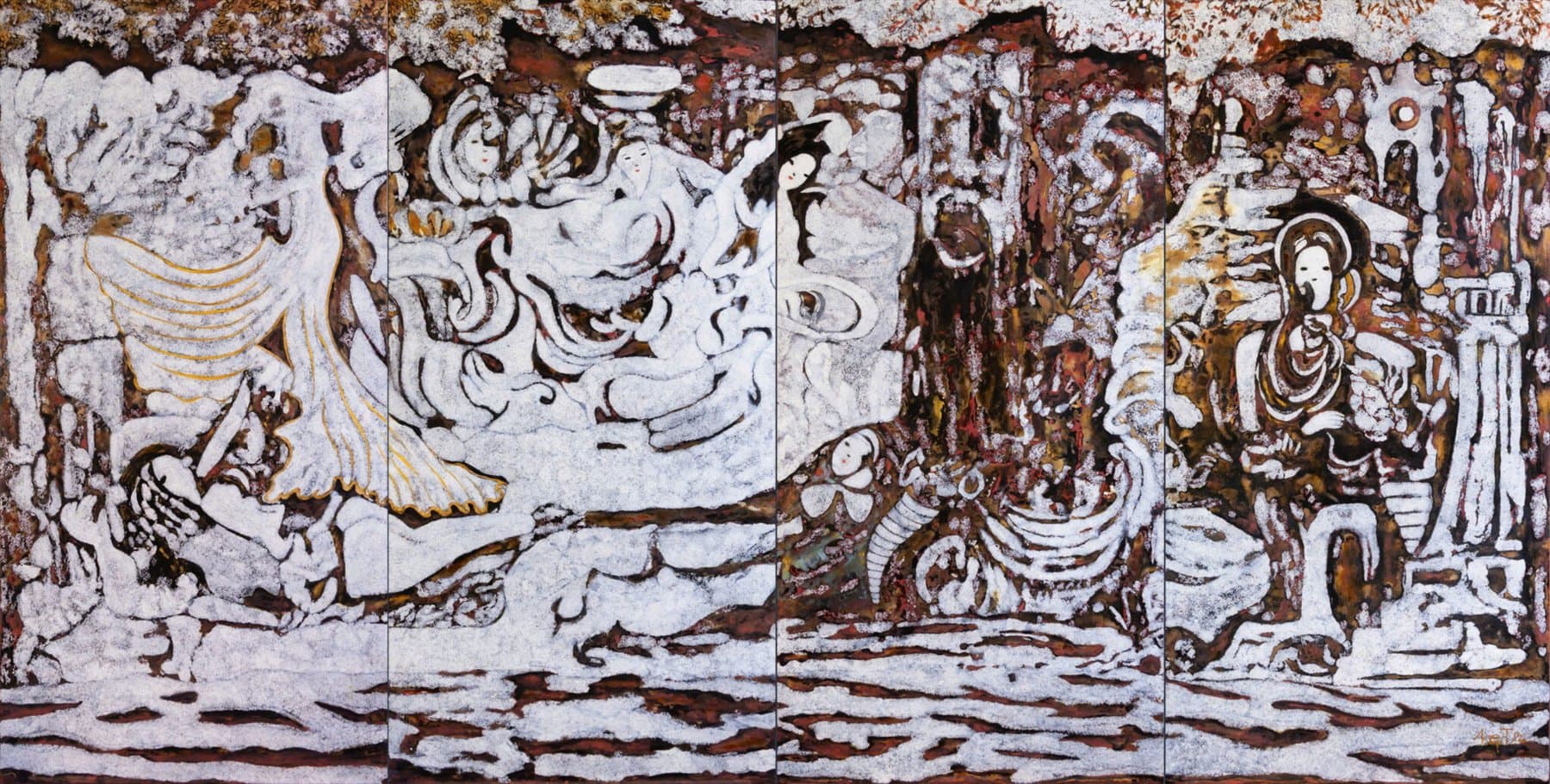
NGUYỄN GIA TRÍ
Celestial Dance by Nguyễn Gia Trí — a four-panel lacquer work in which pale eggshell figures drift across a ground of dark lacquer, russet and gold
Nguyễn Gia Trí, Vũ khúc thiên thai (Celestial Dance), lacquer on panel, 240 × 122 cm, Thai Ha Collection.

Through successive layers of lacquer, gold, silver, eggshell and vermilion, Nguyễn Gia Trí built pictorial spaces in which light seems to rise out of the material itself. More than 200 works and archival materials are reproduced in the book.
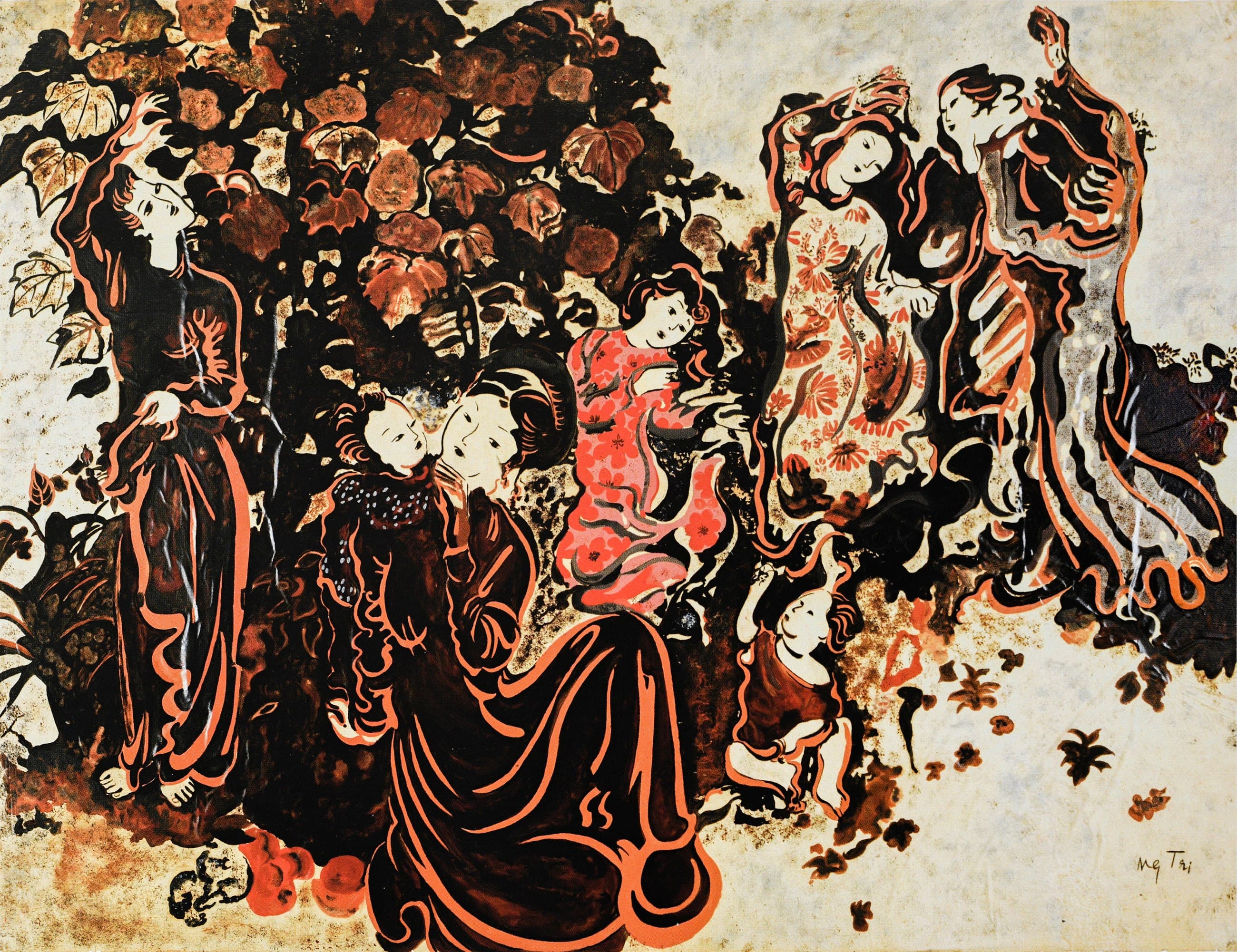
Young Women beside Hibiscus: six women and two children in flowing robes outlined in vermilion, gathered beneath hibiscus branches on a pale lacquer ground
Nguyễn Gia Trí, Young Women beside Hibiscus (study artwork), 1944, lacquer on paper, 102 × 71 cm, Thai Ha Collection.
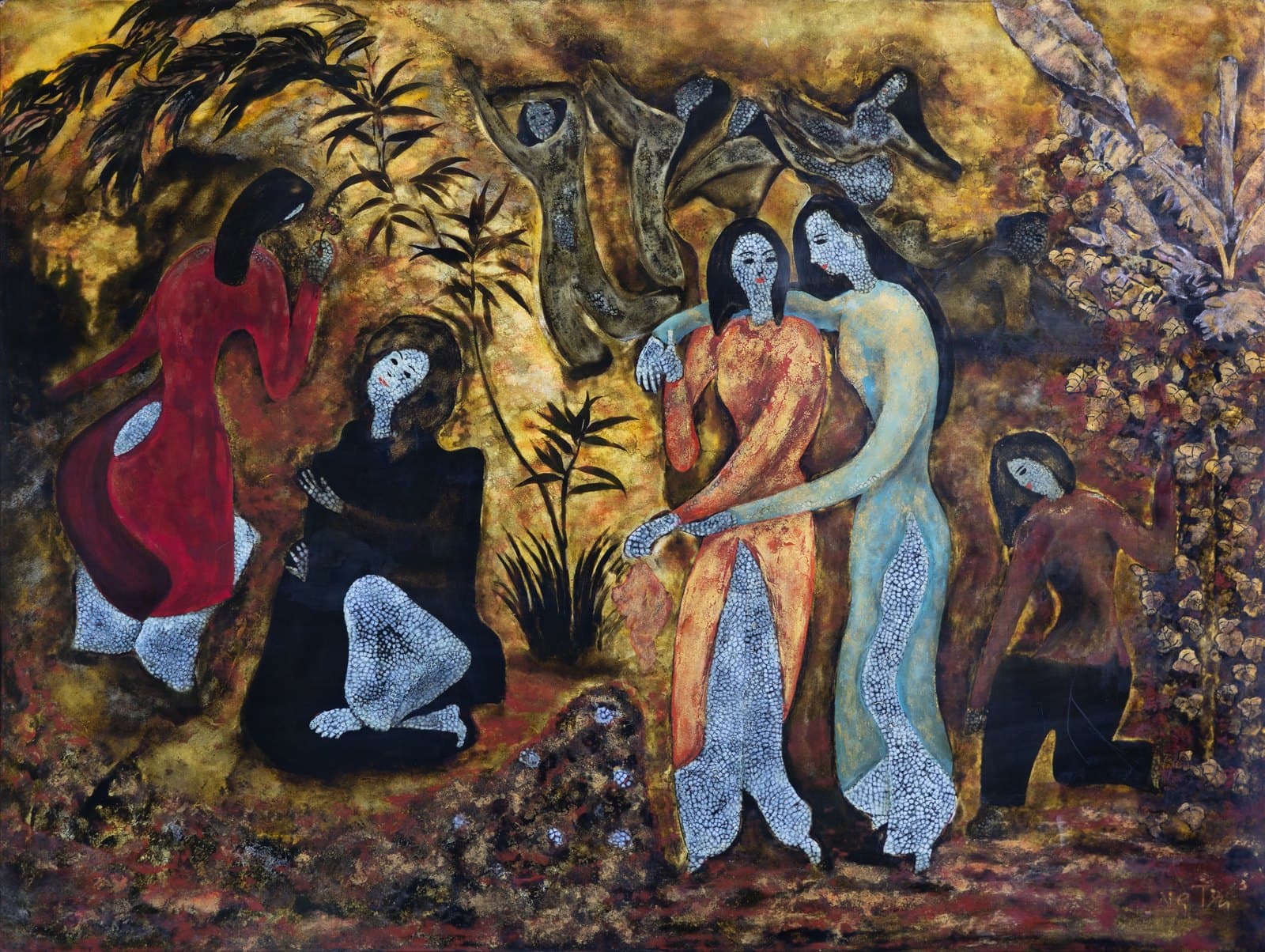
Young Women in the Spring Garden: women in red, black and pale blue robes gathered among foliage on a ground of gold and dark lacquer
Nguyễn Gia Trí, Young Women in the Spring Garden, lacquer painting, 61 × 84 cm, Thai Ha Collection.
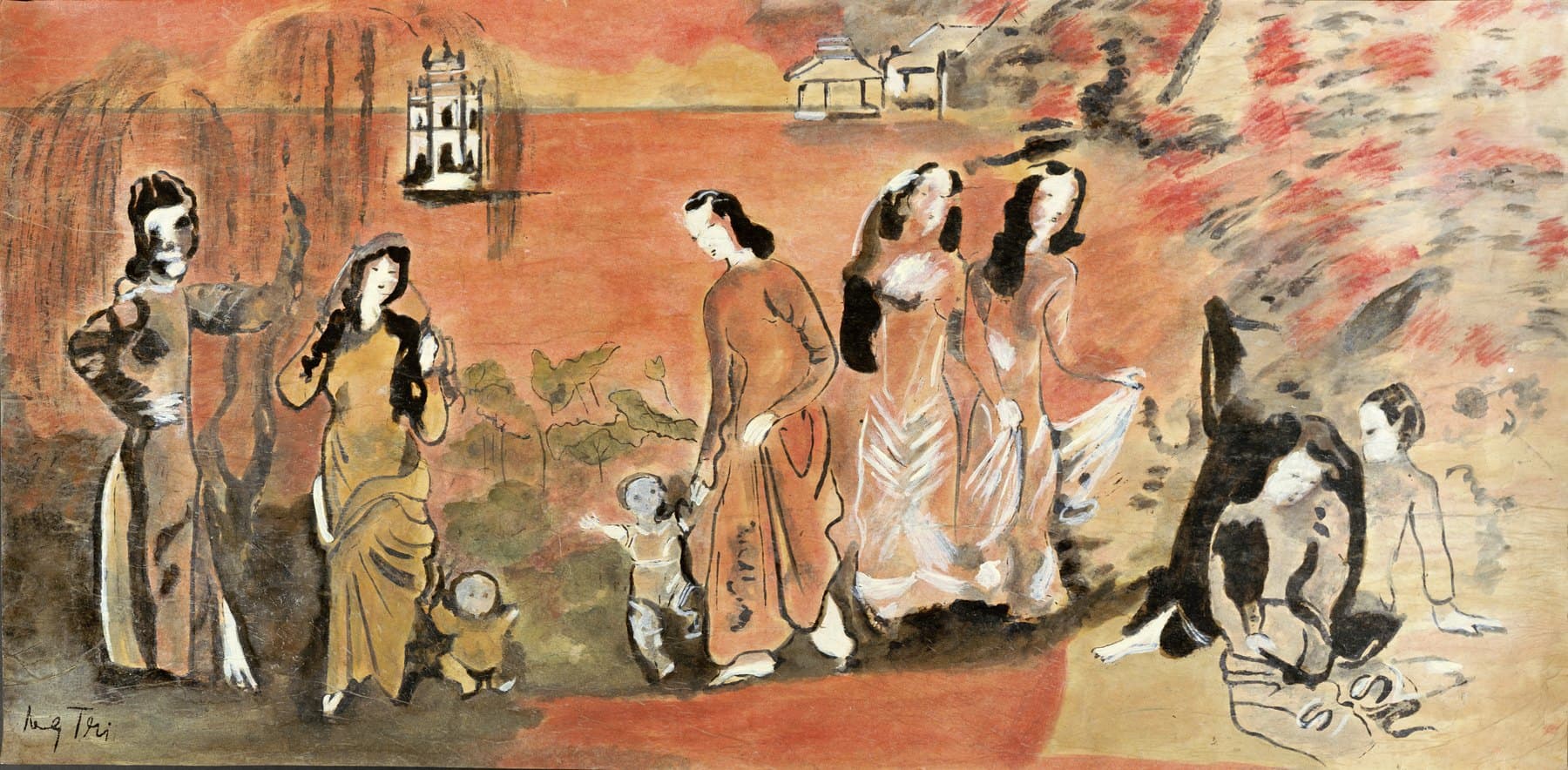
Young Women by Hoàn Kiếm Lake: women in áo dài walking with children along the shore, the Turtle Tower and a red-leafed tree behind them
Nguyễn Gia Trí, Young Women by Hoàn Kiếm Lake, ink, gouache and lacquer on paper, 41 × 84 cm, Thai Ha Collection.
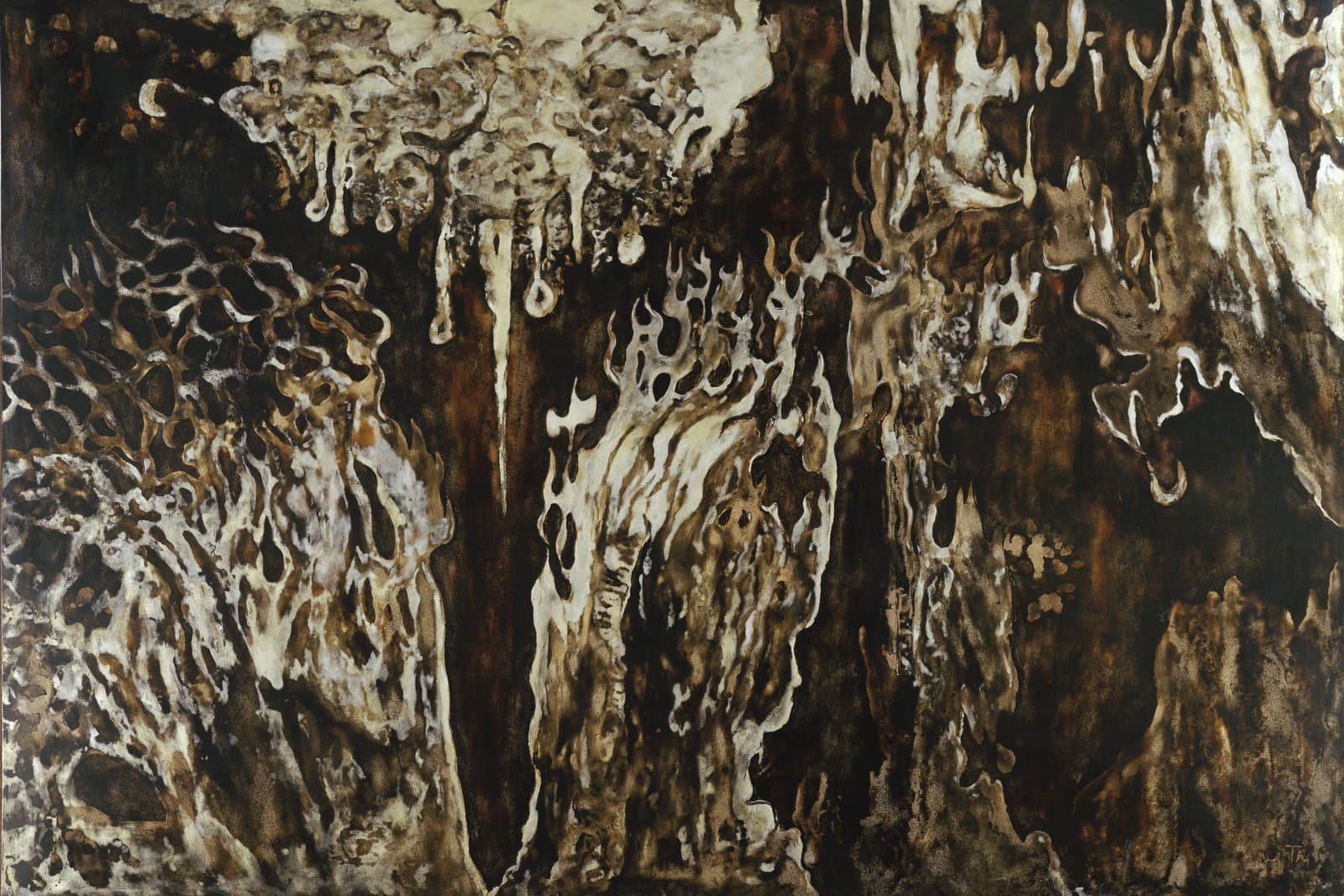
An abstract lacquer: pale eggshell and gold forms running like sap down a ground of near-black lacquer
Nguyễn Gia Trí, Sediments, lacquer on panel, 81 × 122 cm, Thai Ha Collection.
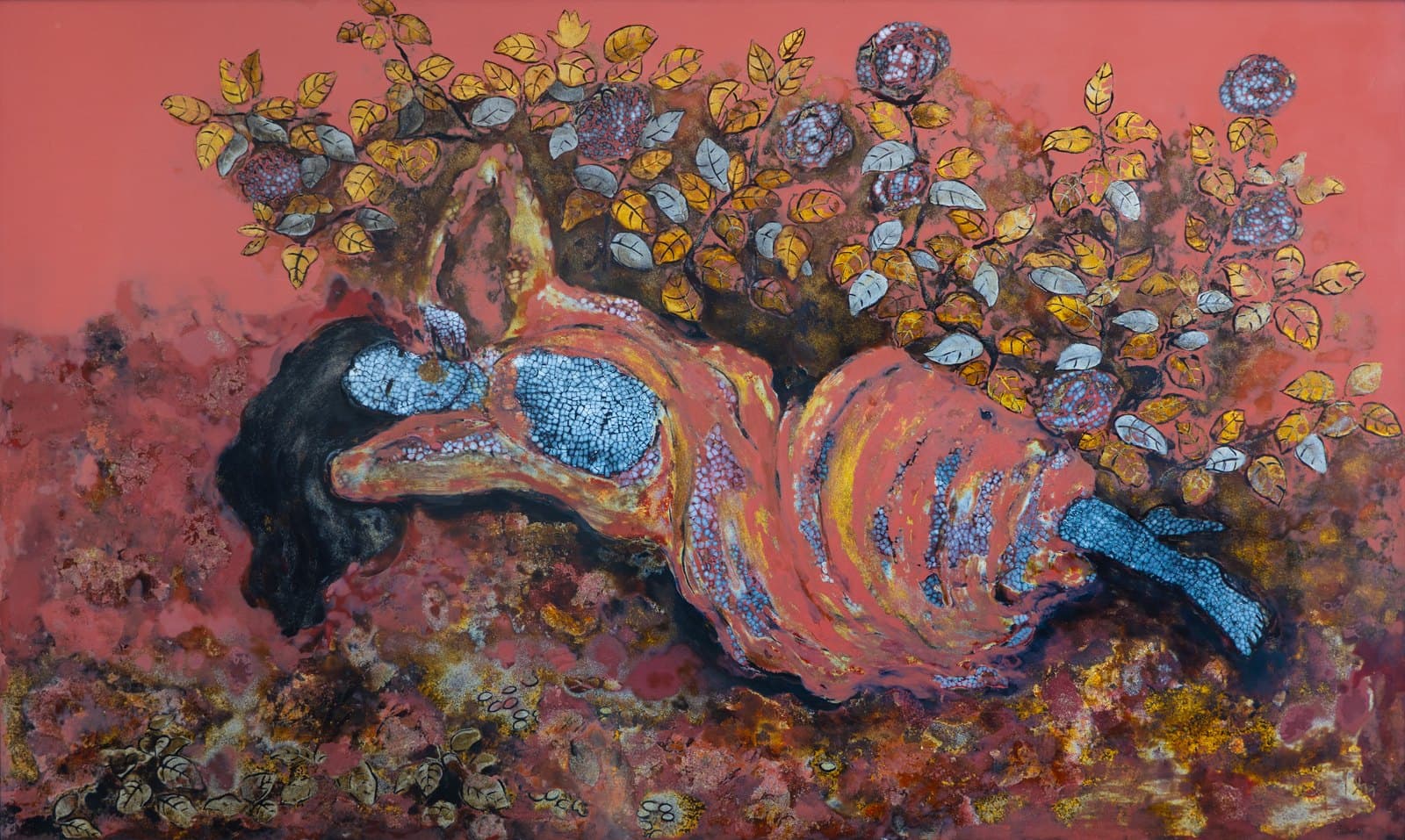
A reclining woman in a patterned robe among flowering branches, eggshell and gold leaves scattered across a coral lacquer ground
Nguyễn Gia Trí, Young Woman with Roses, lacquer on panel, 46 × 74 cm, Thai Ha Collection.
Two reclining nude figures on a vermilion ground, modelled in eggshell and gold, a branch of blossom at the upper left
Nguyễn Gia Trí, Crimson Dreams, lacquer on panel, 71 × 122 cm, Thai Ha Collection.
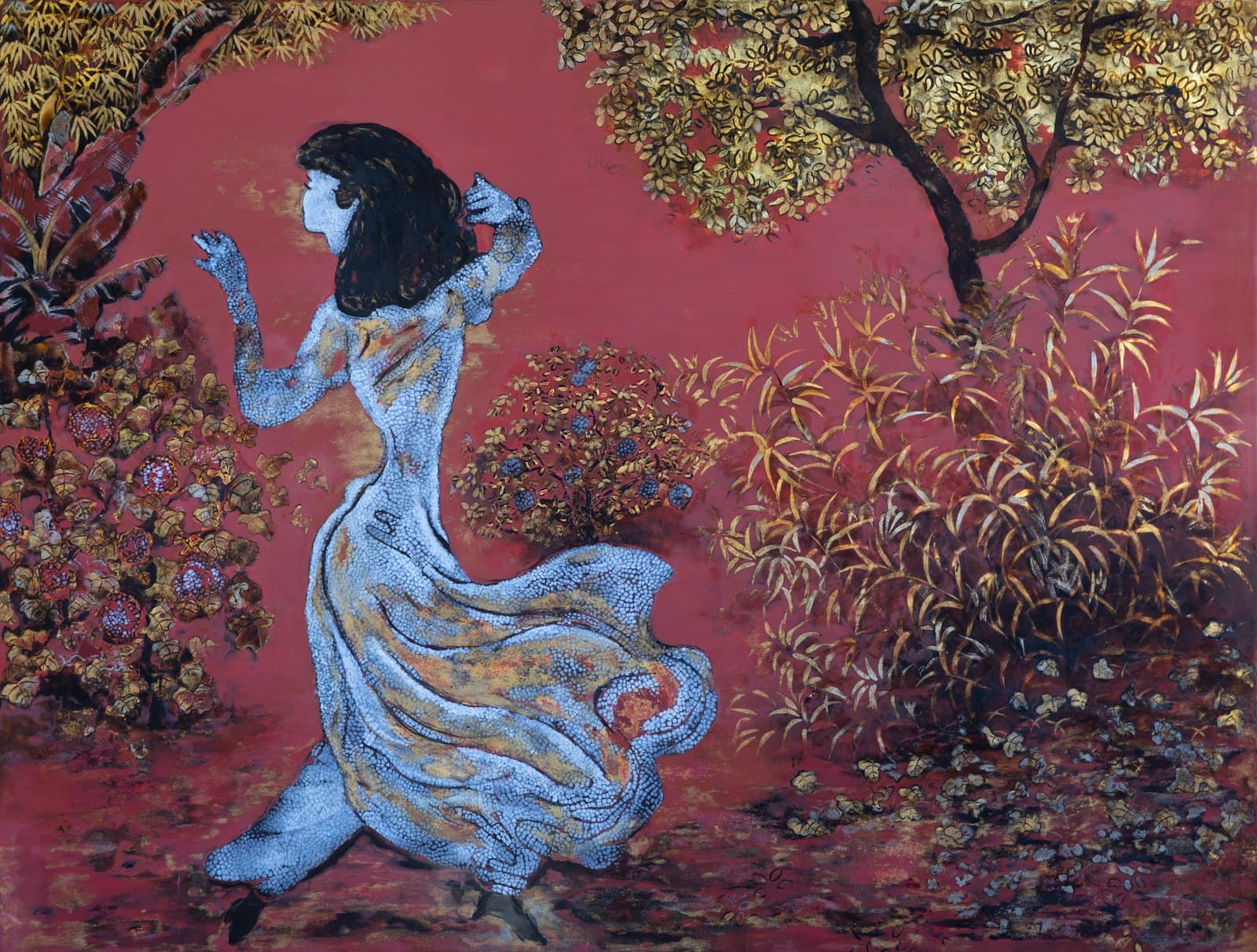
A woman in a pale áo dài stepping through a garden, her robe worked in eggshell and gold against a deep red lacquer ground
Nguyễn Gia Trí, Young Woman in the Spring Breeze, lacquer on panel, 66 × 89 cm, Thai Ha Collection.
A study in ink and wash: women gathered in a garden, one with a lute, drawn in loose outline on a rose-pink ground
Nguyễn Gia Trí, Spring Garden 1 (study), ink, gouache and lacquer on paper, 58 × 76 cm, Thai Ha Collection.

More than 200 works, sketches, photographs and documents are reproduced in Nguyễn Gia Trí — A Vietnamese Lacquer Legend, publishing January 2027.